


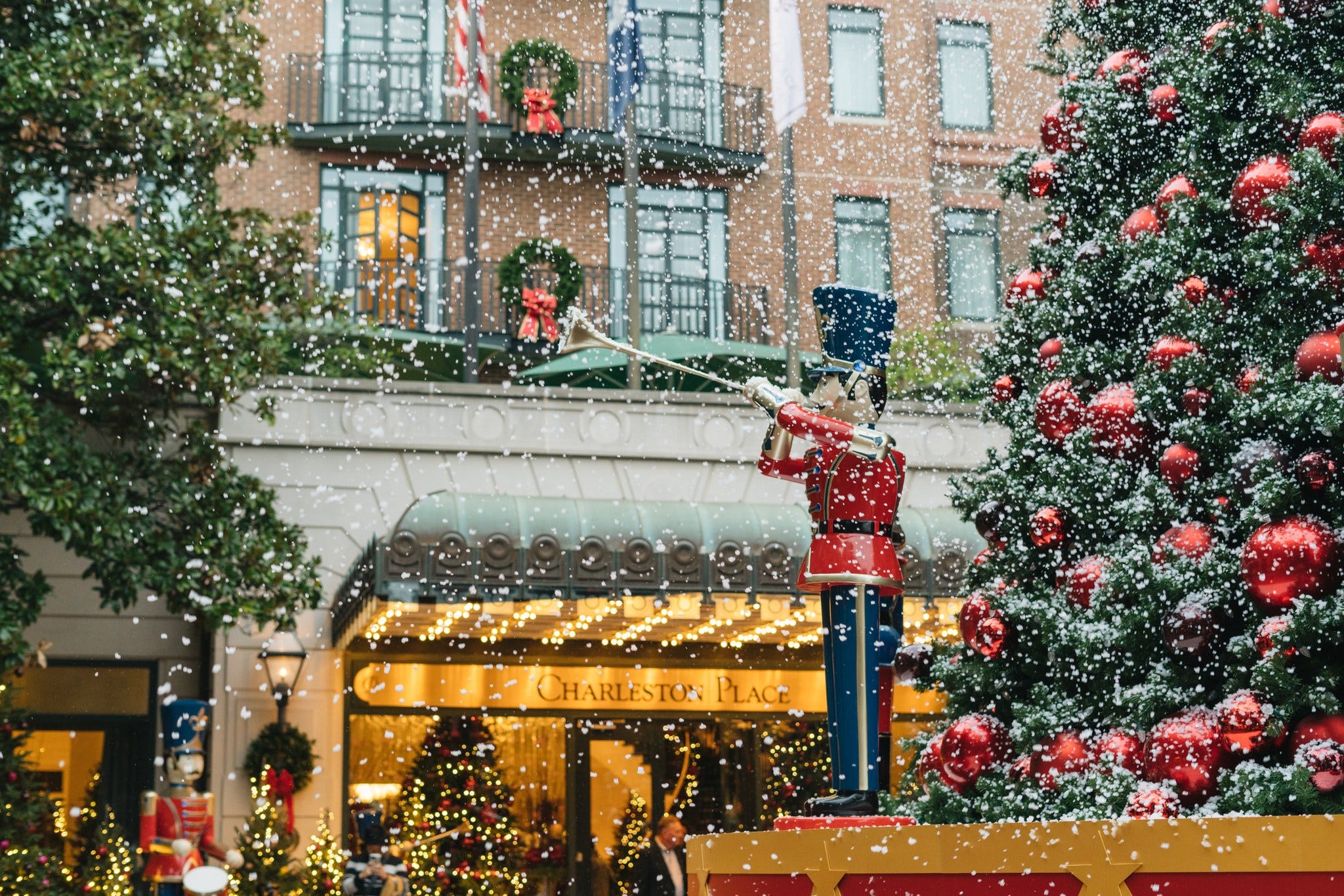
This week, we visit two former plantations in Charleston, South Carolina, that are now historic sites. One is private and the other is public. While you’re in the area, check out Charleston’s Holiday Headquarters. We’ve got the details below.
By the way, if you haven’t finished your holiday shopping list, wrap it up with our 2025 gift guide.
If you haven’t upgraded yet, get full access to this email by upgrading your subscription. For a limited time, we’re offering 20% off an individual upgrade or 30% off a group upgrade. Buy one for yourself and someone else to qualify for the group discount.


The British Evacuation of Charleston and Fenwick Plantation
December 14, 1782
The British completed their evacuation of Charleston on December 14, 1782, ending over two years of occupation. A 400‑man Continental rear guard consisting of 300 light infantry, 80 cavalry under “Light Horse Harry” Lee, and 20 gunners, entered the city under Major General Anthony Wayne to ensure an orderly transition. Around 14,000 people departed aboard some 130 Royal Navy ships, including roughly 4,200 Loyalists and over 5,000 people of African descent—many enslaved, some freed.

Fenwick Hall Plantation on Johns Island served as British General Sir Henry Clinton’s headquarters during the 1780 Siege of Charleston.

Fenwick Hall is considered the finest surviving example of an early Georgian two-story brick plantation house built on the Huguenot floor plan that was widely used in South Carolina plantation houses during the 18th century. Today, it’s privately owned and not open for public tours. In the past, it hosted wedding and special events. Learn more at fenwickhall.com.

The Burning of Middleton Place Plantation
February 23, 1865
During the Civil War, General William Tecumseh Sherman blazed a trail through the Southeast that reduced many historic plantations to ashes. Just before the war ended, Sherman and the 56th New York Regiment of volunteers targeted Middleton Place Plantation in Charleston, which planter John Williams built on the banks of the Ashley River in the late 1730s for his son-in-law, Henry Middleton, who served as president of the First Continental Congress.
Middleton’s son, Founding Father and Declaration of Independence signer Arthur Middleton, lived there during the last years of his life. Arthur’s son Henry and grandson Williams (yes, that’s Williams with an “s” on the end) oversaw the home’s transition into a rice plantation. When Williams learned of Sherman’s approach, he evacuated the property.
In 1886, an earthquake destroyed what was left of the family residence. Henry Middleton’s descendant, John Julius Pringle Smith, inherited the plantation in 1916 and began restoring it in 1925, after his father’s death.
