


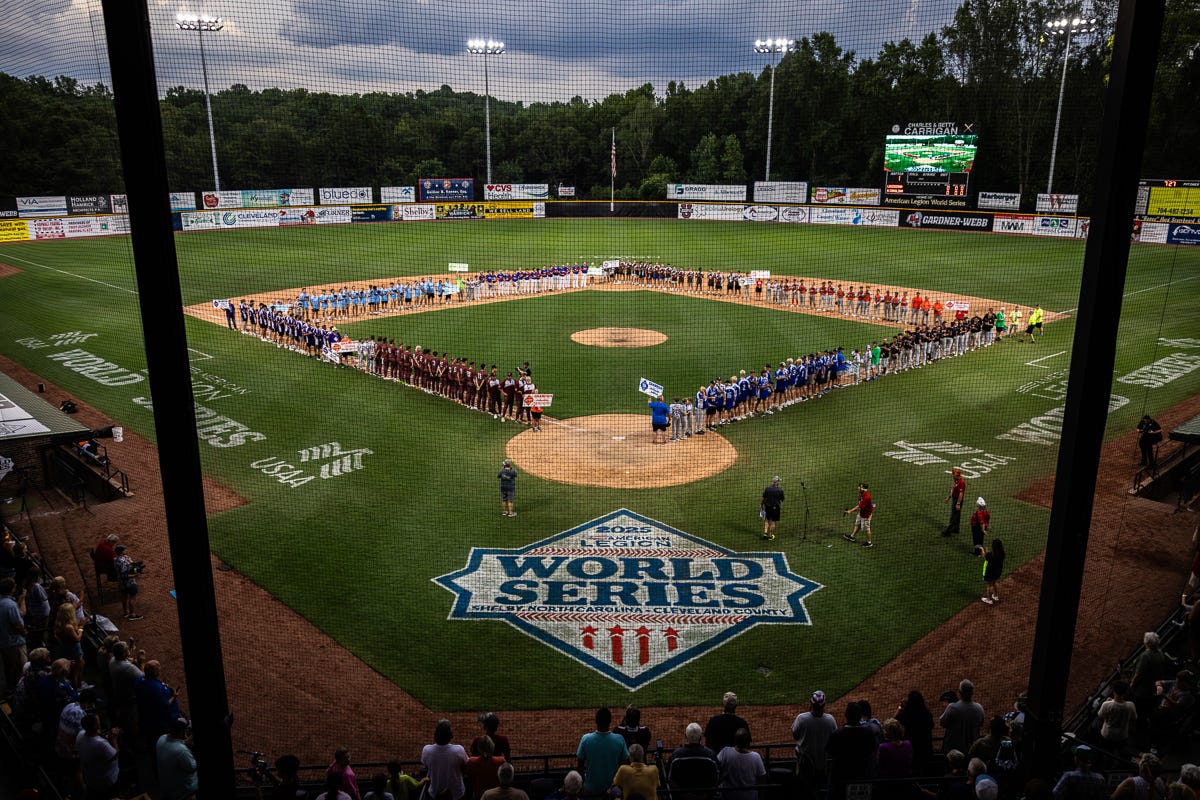
Whatever American Legion Baseball may lack in visibility today, it more than makes up for in tradition.
By Kurt Dusterberg
Baseball has long been part of our country’s summertime landscape. For more than a century, fans of America’s pastime have filled major league stadiums to watch the greats of the game. In mid-size towns across the country, minor league ballparks have added to the game’s charm with an up-close view of tomorrow’s stars.
But all across America, another brand of the game—one without much fanfare—has endured for a full century. American Legion Baseball claims more than 3,000 teams that play in local communities. Most players in the amateur baseball organization are older teens, but players as young as 13 are eligible. In many towns, teams are made up of college-bound players, while others do what they can to put together a team to play a summer schedule.
The organization celebrated its 100th anniversary in 2025. “It’s been around forever,” says Gary Stone, the American Legion National Baseball Committee chairman. “You don’t last that long if you don’t do something right.”
Stone coached Post 340 in Independence, Missouri, for twenty-five years before serving as an administrator. Over that time, he has seen amateur baseball change. The explosive growth of travel sports has drawn many families toward organizations that seek exposure for their young athletes in highly competitive environments. Legion baseball still operates with one eye toward the American Legion’s foundational objectives. The nation’s largest veterans service organization promotes the importance of sportsmanship and active citizenship.
“You learn how to work together as a team and work toward a goal,” Stone says. “Anybody can learn how to win, but you need to learn how to lose. If you lose, you don’t mope about it for a week. Get over it. It’s a new day tomorrow. It doesn’t mean you teach them to be losers. But you learn how to accept the good with the bad.”
Legendary Links
Whatever American Legion Baseball may lack in visibility today, it more than makes up for in tradition. Founded in Milbank, South Dakota, in 1925, the group originally rallied around the words of a Sioux Falls attorney, who suggested, “The American Legion could well consider the advisability of assisting in the training of young Americans through our athletic games.”
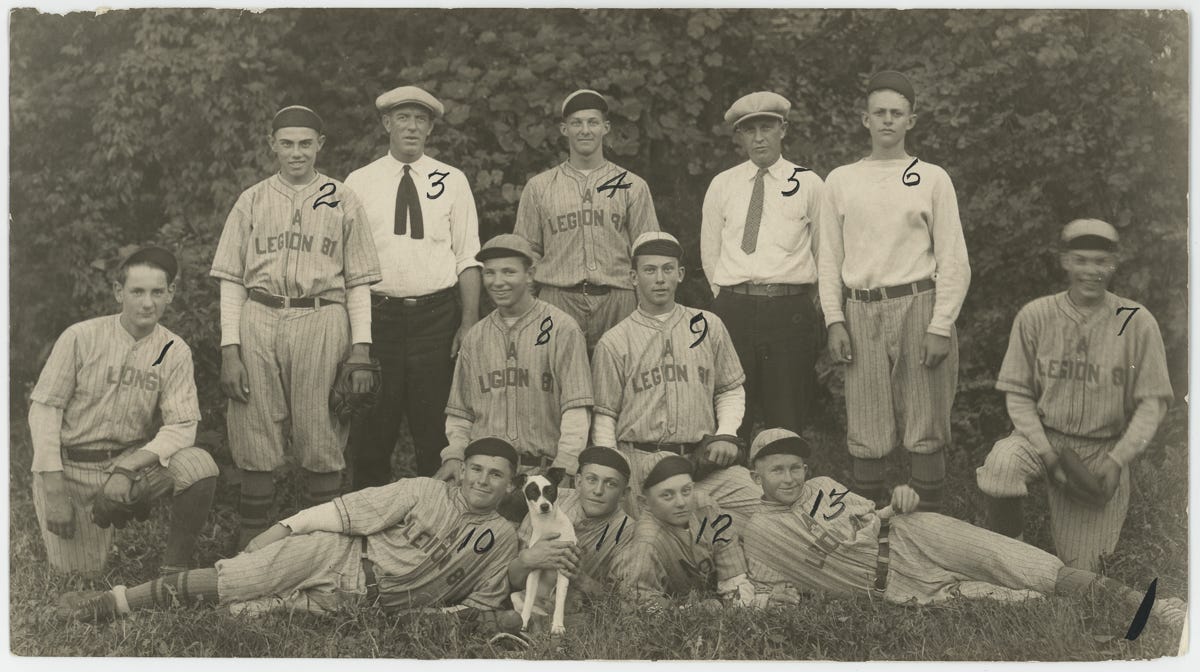
Within a few years, the group had secured a $50,000 annual donation from Major League Baseball Commissioner Kenesaw Mountain Landis. MLB maintains an informal partnership with the league to this day, thanks to the remarkable success of early Legion players. The Baseball Hall of Fame boasts 90 former players, including Ted Williams, Stan Musial, Johnny Bench, Tony Gwynn and Greg Maddux. In its early decades, American Legion Baseball was so popular that Babe Ruth, long retired from the New York Yankees, became the official ambassador for the organization. He traveled the country in 1947 and 1948 to inspire kids while battling cancer at the end of his life.
More recent major league stars have sung the praises of playing Legion ball. Don Mattingly was a six-time All Star for the Yankees in the 1980s and 1990s. Now the interim manager of the Philadelphia Phillies, Mattingly starred on his local Legion team. “I played in Evansville (Indiana) for Funkhouser American Legion Post 8,” Mattingly is quoted as saying on the Legion website. “It was a great experience for me. I love Legion. It really kind of got me ready for pro ball because you played a lot of games during the summer break, and there were no true practices because you played so many games.”
Shelby in the Spotlight
Today, Legion baseball has a hit-or-miss presence around the country. Some states have hundreds of teams, while others number in the single digits. The mid-Atlantic and Southeast have prosperous programs, led by North Carolina, which boasts 100 teams; South Carolina, with 69; and Virginia, with 29.
