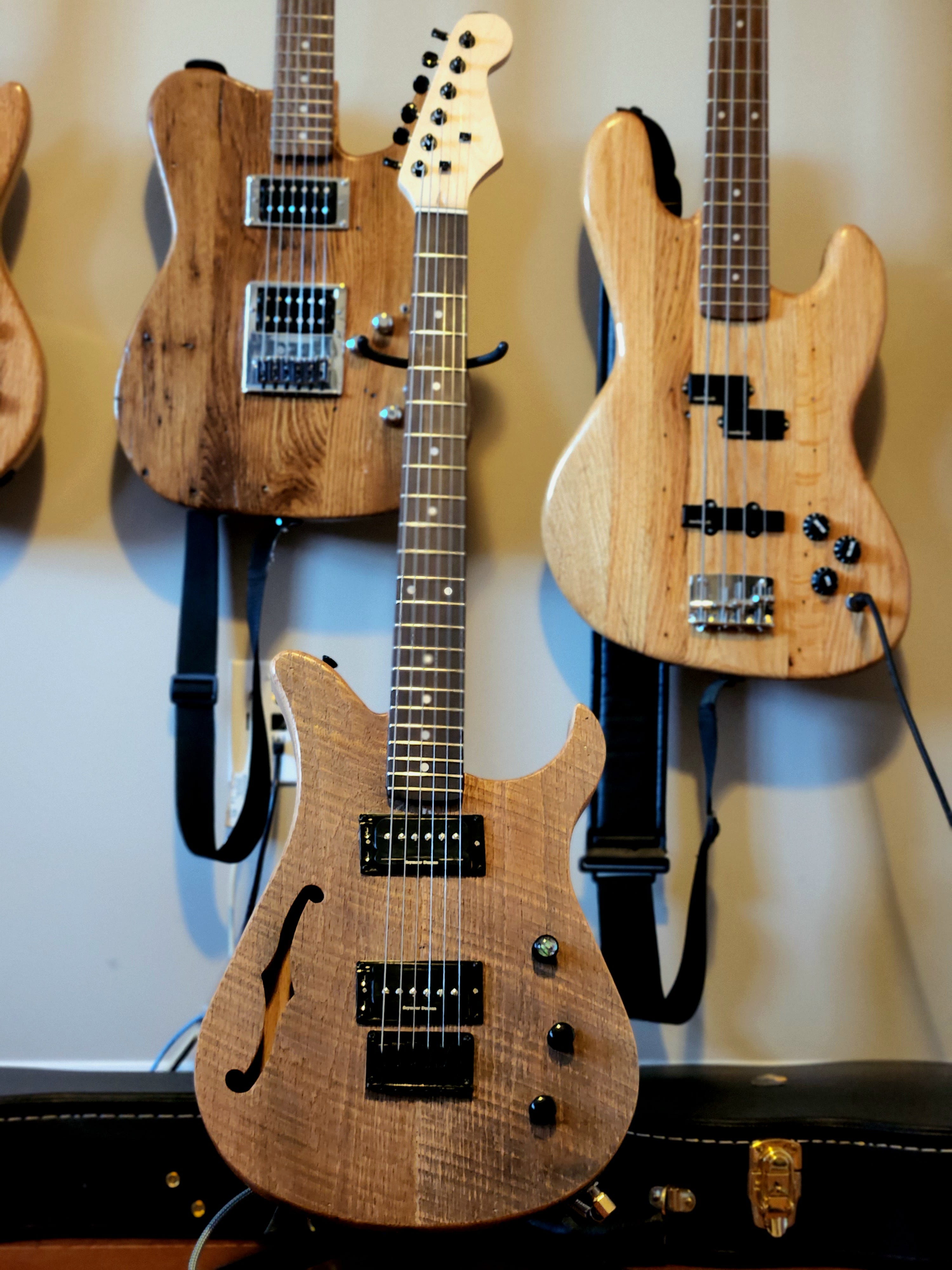

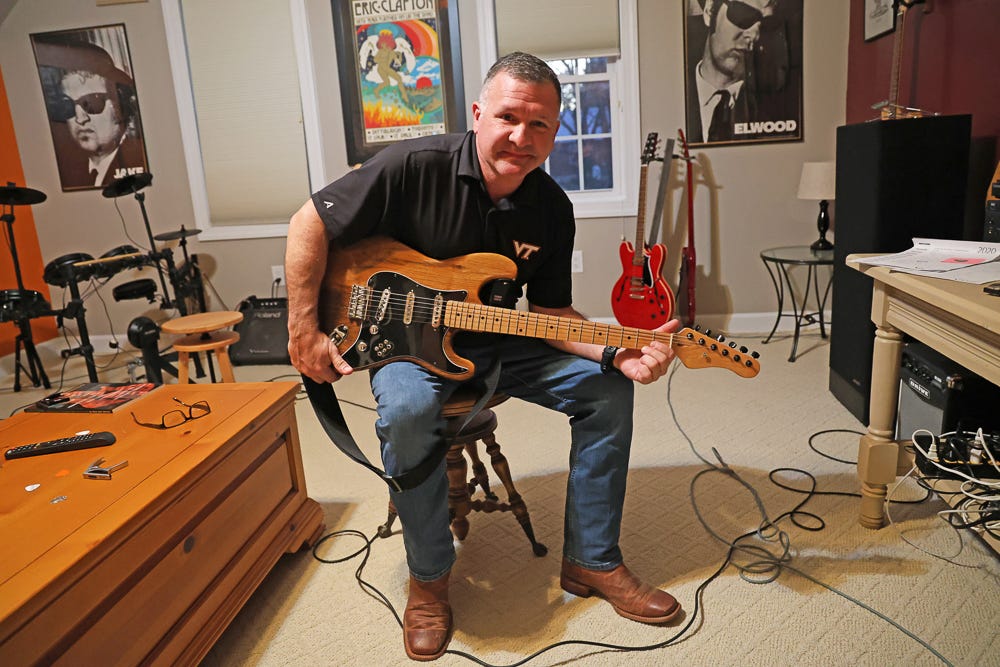
Keith Weakley of Stanley, Virginia, started playing the guitar at age 24. An executive with a background in structural engineering by day, Keith’s love for playing inspired him to take a step beyond where many amateur guitarists are willing to go. Find out how, and why, in our conversation below.
How did you first become interested in handcrafting guitars?
To be perfectly honest, it is because I was cheap. I bought a used Mexican Stratocaster from a pawn shop, but I really wanted a Telecaster. After checking the prices of Telecasters, which were in excess of $1,500, I convinced myself I could make one cheaper than that, so I did. Then I wanted a double fat Tele (meaning two humbuckers/double coils, versus a traditional single-coil setup), so I made that. Then I wanted a Les Paul, and after that I started designing my own body shapes and circuitry.
How many have you handcrafted and how long does it take to make one?
I wish I had kept more meticulous records. I suppose I’ve made over 30 at this point. I started around 2003 or so. I tend to work on them in the winter, when the weather is worse, as I spend summertime in the garden, or cycling. If I could spend my time uninterrupted, it would be about 80 hours for each one. Most of that time would be in the finishing phase, which requires a lot of spraying and sanding, mainly by hand. The final wet sanding phase is the most tedious, using grits of 1,500 and 2,000. My work schedule has slowed down my production, but I do currently have one in the works.
What kind of wood and other materials do you use to make each one?
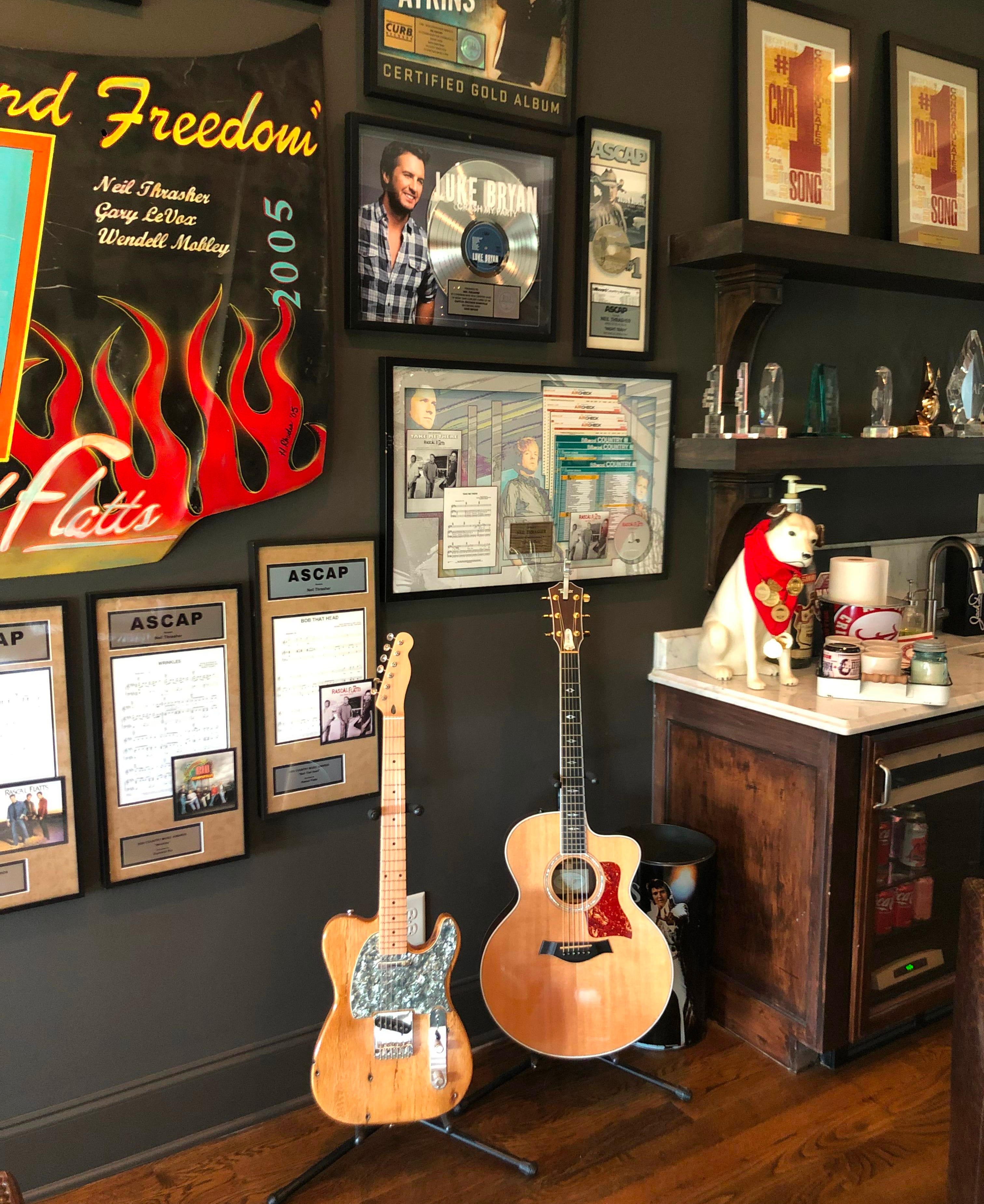
It varies. I have used all sorts—reclaimed oak from an old house I was remodeling, wormy chestnut my grandfather reclaimed from an old building he tore down, barn wood from a barn built in the late 1800s, as well a maple from a tree in my dad’s yard that was taken down. The hardware is bought from various online stores, which includes knobs, the bridge, pickups, etc. I prefer to keep it natural wood with a clear finish (no stain or paint). Wood is pretty enough on its own, so no need for paint or other things that cover that up. I made one out of sassafras and it was spectacular. As an added bonus, the shop smelled amazing, since it’s such an aromatic wood!
How do you individualize each guitar?
Once I settled on a unique body shape, I stuck with that, with few exceptions. Most of the customization then comes from the wood type, pickup arrangement, and circuitry. I did use bumper stickers for a Virginia Tech/Duke look on a pickguard for one guitar that was a gift. I’m currently expanding from solid bodies to semi-hollow bodies (like a Tele Thinline). This allows me to continue to use the approximately 150-year-old barnwood that I still have left that is too thin for a traditional solid body electric.