


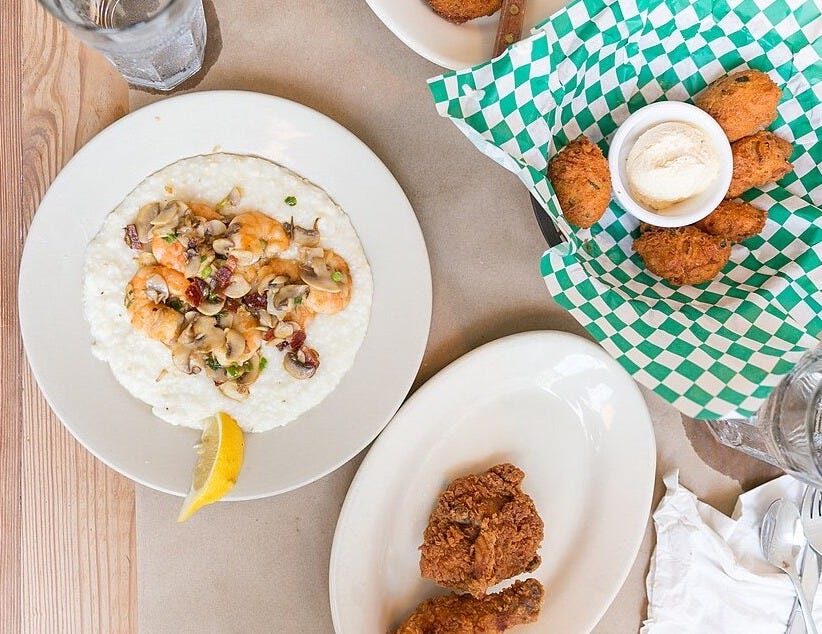
It may have started as creekside fuel, but today shrimp and grits reigns as a cultural and culinary ambassador in the South Carolina Lowcountry. Scroll to the end for Patricia Branning’s shrimp and grits recipe.
Shrimp and grits didn’t begin its life on fine china with parsley sprigs and waiters in starched shirts. This dish was born of necessity, cooked creekside at dawn by hungry fishermen.
A shrimper would take a pot out on the boat—grits, shrimp, maybe a little bacon grease if luck was with him—and let it bubble over a low flame until it was edible. Practical. Filling. Cheap. It was the sort of meal meant to warm the bones and fuel a hard day’s work.
But its story reaches further back, long before Charleston existed. Food historian Michael Twitty traces the roots to Mozambique, where people were preparing cornmeal and shellfish centuries before the transatlantic slave trade. Later, enslaved Africans carried that knowledge with them across the ocean, and in the Lowcountry it took root—bubbling in plantation kitchens, along riverbanks, and in the boats of Carolina shrimpers.
The Crook’s Corner Makeover
Fast forward to the early 1980s, when Chef Bill Neal of Chapel Hill’s beloved Crook’s Corner took shrimp and grits off the back porch and marched it straight into the culinary spotlight. He dressed it up with cheese, mushrooms, and bacon, turning a fisherman’s breakfast into fine dining.
When New York Times food editor Craig Claiborne tasted Neal’s version, he wrote about it with such enthusiasm that shrimp and grits went national overnight. Suddenly, folks from Manhattan to Memphis were ordering it like they’d grown up on it.
A Dish With Soul
That’s the magic of shrimp and grits. It may have started as creekside fuel, but today it reigns as a cultural and culinary ambassador in the South Carolina Lowcountry. From humble pots to polished plates, each bowl tells a story of survival, adaptation, and return.
By the late 1800s, grits were a staple on every Southern table. But when industrialization swept through the South, small gristmills vanished, replaced by factories that stripped away the corn germ for longer shelf life—and with it, much of the flavor. What had once been creamy and nutty became pale and lifeless.
Yet in the small kitchens of Edisto, Beaufort, and Eutawville, women kept the faith. They stirred grits slowly with wooden spoons, whispered the secrets of seasoning to their daughters, and measured not with cups but with memory. Because of them, the real taste of the South was never lost.
Serving History
Every Southerner worth their salt has an opinion about shrimp and grits. Some prefer it rich with cream and butter, others spicy with sausage and peppers, and still others swear by keeping it simple—shrimp, bacon, and a whisper of lemon. However you stir it, shrimp and grits is more than a meal. It’s a rite of passage, a love letter written in cast iron.
The first printed mention of “breakfast shrimp” appeared in an 1891 issue of the Louisiana Review. A few decades later, Charleston’s Two Hundred Years of Charleston Cooking (1930) included a recipe titled “Shrimps and Hominy,” credited to the author’s butler, William Deas. He claimed to have eaten it every morning of shrimp season for as long as he could remember—likely since before the Civil War.
From Beaufort to New Orleans, the dish evolved as it traveled. Down the coast, cooks added country ham, brown sauce, a dash of hot pepper, or a ladle of collards from supper. In South Carolina cafés of the 1960s and ’70s, shrimp and grits were proudly said to be cooked in “beach water”—briny, bold, and born of the sea.
As Nathalie Dupree, the doyenne of Southern cookery, once wrote, “Shrimp and grits crossed cultures everywhere it went.” In small Southern towns, Jewish families served grits with fried salt herring, soaked overnight and browned in butter. However it’s made, the story remains the same—humble ingredients, big flavor, and a sense of home stretching from the Carolinas to the Gulf.
In Search of a Legend
My own search for heirloom grits led me into a story of moonshine, heritage, and heart.
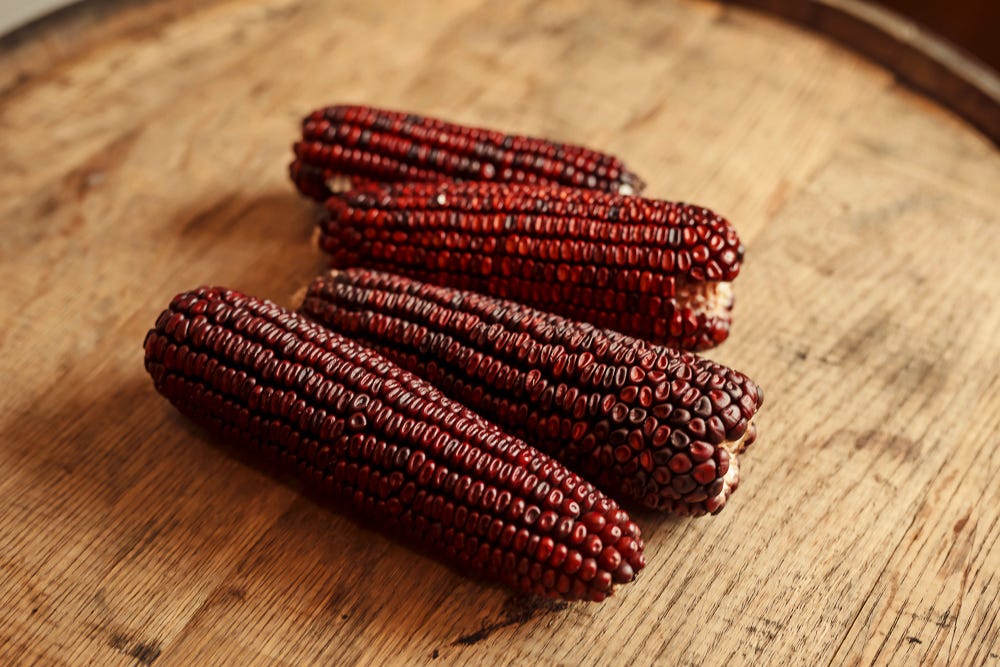
One July afternoon that felt hot enough to melt the paint off a barn, I left Beaufort and headed north on Highway 21 in search of a legend: Jimmy Red corn. The road wound past cinderblock fish markets and tin-roofed churches until the pines opened to the vast marshes of the ACE Basin—a 140,000-acre wilderness where Ashepoo, Combahee, and Edisto rivers still remember how to breathe.
At last, I reached Lavington Plantation, where fields of corn shimmered in hues of gold and crimson. Each stalk told a story—of bootleggers who once distilled its sugar-rich kernels into whiskey, of Gullah farmers who coaxed life from tidal soil, and of a new generation returning to the land through food.
Jimmy Hagood walks those rows like a historian with dirt under his nails. To him, Jimmy Red isn’t just a crop—it’s a calling. He grinds the kernels into coarse, nutty grits that taste like the Lowcountry itself: earthy, buttery, and steeped in memory. Alongside his cane syrup and Carolina Gold rice, those grits have become the backbone of Charleston’s most soulful dishes.
Here, conservation and cuisine share the same heartbeat. Egrets drift through cypress shadows, and the air hums with life returning to the land. This is farming with its soul intact—stewardship written in furrows and sunlight.
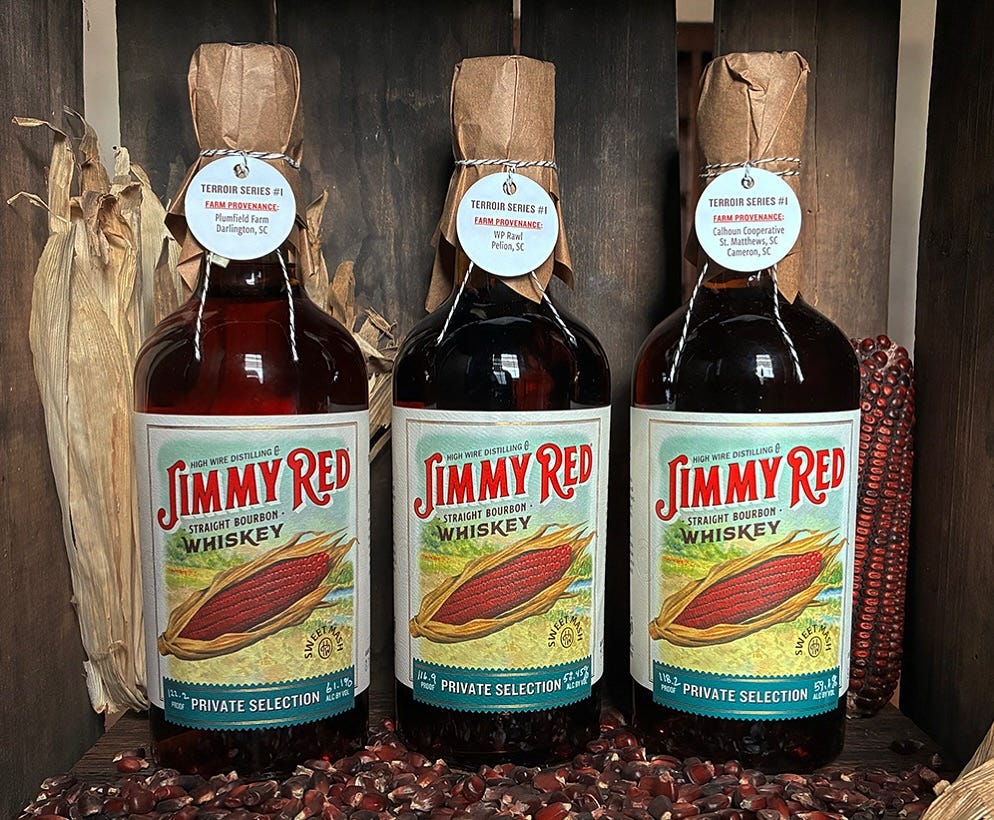
For nearly a century, Jimmy Red corn was used by bootleggers to make moonshine whiskey. Then it nearly went extinct in the early 2000s, but two remaining ears of corn were used to revive it. They were gifted to celebrated local farmer and seed saver Ted Chewning, with the suggestion that he grow it out for his hogs.
