


This week we visit a historic South Carolina town, recall the burning of Columbia, and discover a suspension bridge that links both Carolinas. Plus, if you like pimento cheese, read all the way to the end.
Free subscribers can preview this email. Upgrade your subscription for full access.
Village of Remembrance
Explore Mount Carmel’s Huguenot History
By Tom Poland
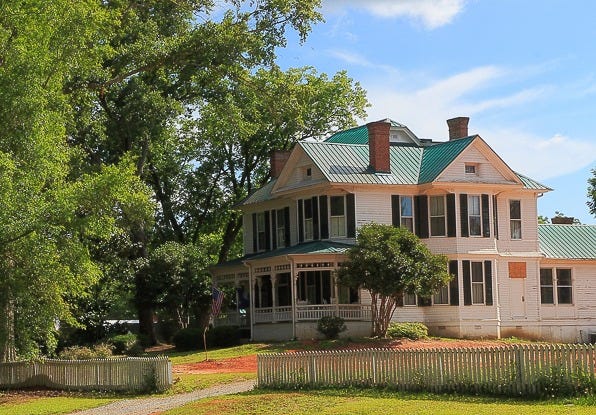
It’s been called the Village of Remembrance with good reason. The old homes and shuttered churches in this late-19th century village will pique your curiosity. Its Classical, Victorian, and Queen Anne architecture evokes grandeur. For that and more, South Carolina Highway 81 lures me back time and again.
I drive through the Village and wonder about the people who built such fine homes and stores. I lunch at Mount Carmel Café, then walk the streets identifying homes and businesses with a hand-drawn map. Where, I wonder, is my great-granddad’s old home? I heard it burned. Among my missions? Finding that long-lost home’s site.
Return with me to that village by the Savannah Valley Railroad. Hear that bell? Hear that whistle? Orange sparks escape billowing black smoke as the locomotive chugs toward the Village. Trailing steam, it’s come to haul off area-grown cotton.

The Burning of Columbia
On February 17–18, 1865, Union forces under General William T. Sherman captured Columbia, South Carolina, and one-third of the city burned amid chaos. Retreating Confederates scorched cotton bales to deny them from Union soldiers, leaving streets littered with flammable fibers. Some troops and locals looted warehouses and offered whiskey to Union soldiers. A fierce wind spread the embers and ignited a conflagration that destroyed 458 buildings. After the fire, Confederate General Wade Hampton blamed Sherman for the fire and other South Carolinians gathered evidence against him, but in 1873, a claims commission found no fault.
