


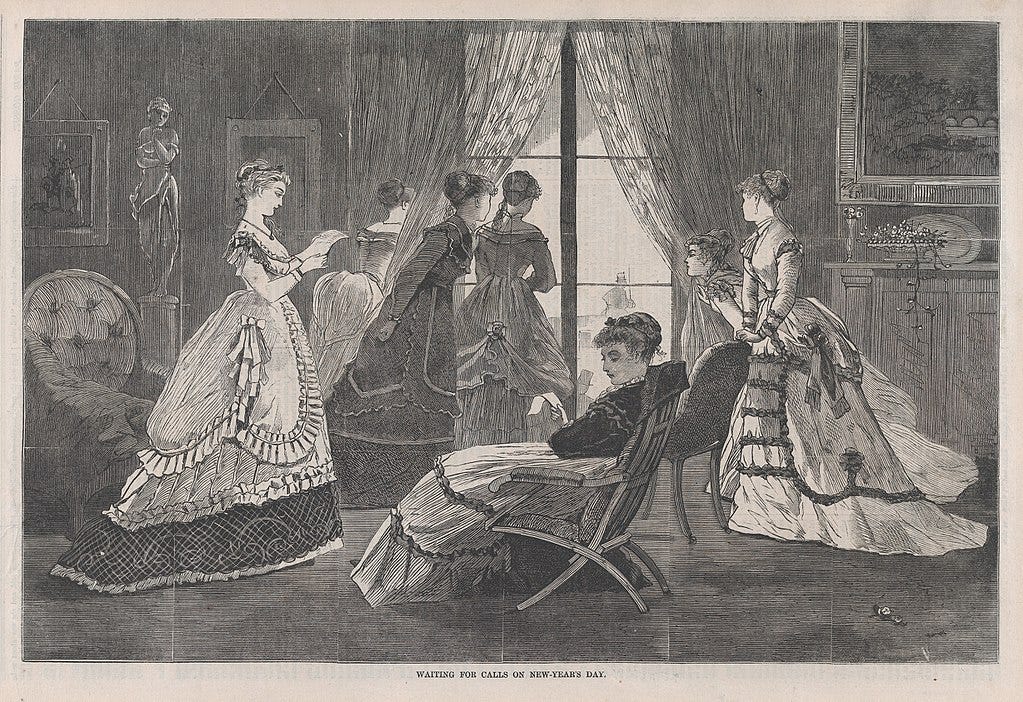
Happy New Year! As we put the finishing touches on our Winter issue, let’s kick off 2026 with an email celebrating traditional European New Year’s customs that took hold of America when she was just a child, during the late 1700s.
Free subscribers can preview this email. Upgrade your subscription for full access.
New Year’s Day Calling
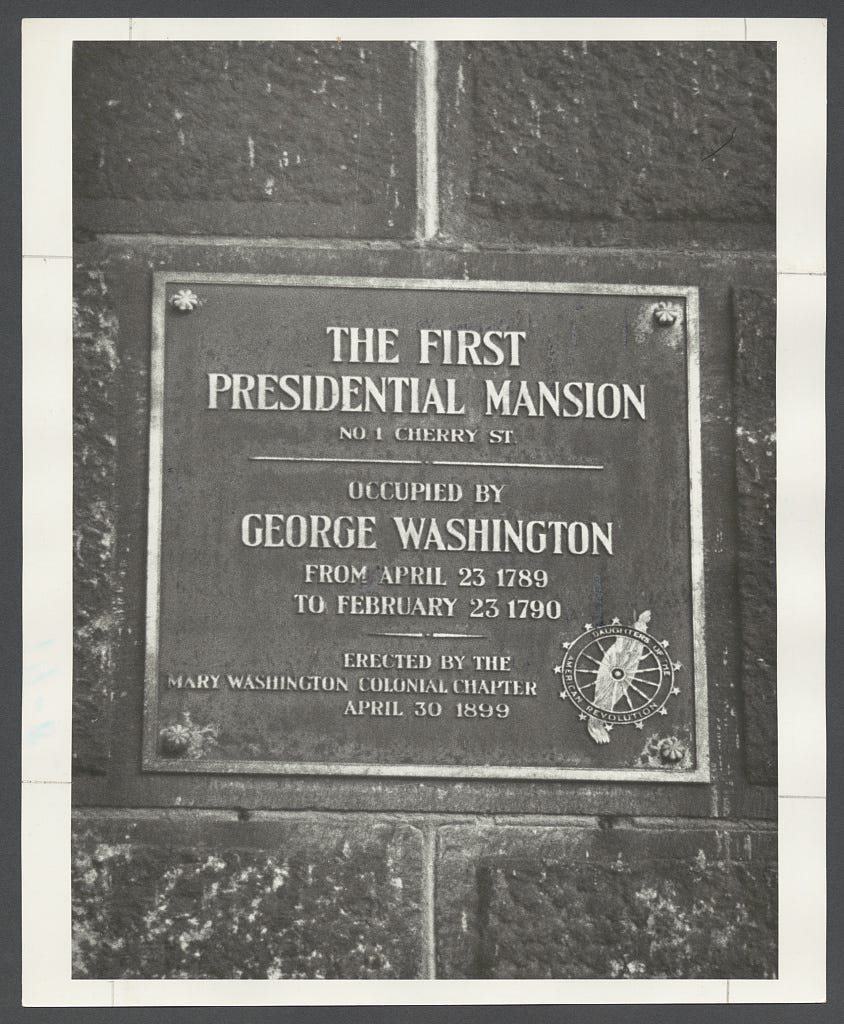
Many Americans still honor traditional New Year’s Day customs, such as the Dutch practice of calling on friends and family, which first took hold in New York City. George Washington was introduced to it on New Year’s Day in 1790, when, as our newly elected president, he received calls from the elite gentlemen of New York society at his Cherry Street residence, also known as the Samuel Osgood House or Franklin House. About this, Washington reportedly said:
“The highly favored situation of your city will, in process of time, attract numerous emigrants, who will gradually change its ancient manners and customs, but never give up the cheerful, friendly observance of New Year’s Day.”

As the practice of New Year’s Day Calling grew, New York City bakers capitalized on it by creating oversized New Year’s cakes, as referenced in an ad from the December 22, 1838 edition of The Evening Post, which read:
“The largest plum cake ever exhibited in America can be seen at Amelie’s Saloon, no. 395 Broadway. It is an immense mass of the richest materials, weighing over three thousand pounds, and is 18 inches larger in diameter than the cake of last year. It is deservedly called the “Ne Plus Ultra.” An elegant Grecian Temple, ornamented with exquisite taste, contains this luscious Monster. Admission to the cake 12 1/2 cents. The above cake will be cut on Monday next for New Year’s Day.”
The traditional holiday plum cake is really just a rich fruitcake—much like the recipe we published in our fall issue, provided by contributor Patricia A Branning (linked below). It’s packed with dried fruits (often soaked in spirits), nuts, and spices, and traces its roots to medieval England. The cake evolved from a plum porridge eaten on Christmas Eve to “line the stomach” after Advent fasting, and is made with oats, dried fruits (referred to as plums), spices, and honey.

First-Footing
First-footing, a cherished Scottish Hogmanay tradition, involves the first person to enter a home after midnight on New Year’s Eve setting the household’s fortune for the year ahead. Ideally a tall, dark-haired man—stemming from ancient fears of fair-haired Viking invaders—this “first-footer” brings symbolic gifts like coal for warmth, shortbread or bread for sustenance, salt for flavor, a black bun for prosperity, and a dram of whisky for cheer. Rooted in pagan rituals to ward off evil, it remains vibrant in Scotland with modern twists like fireworks.
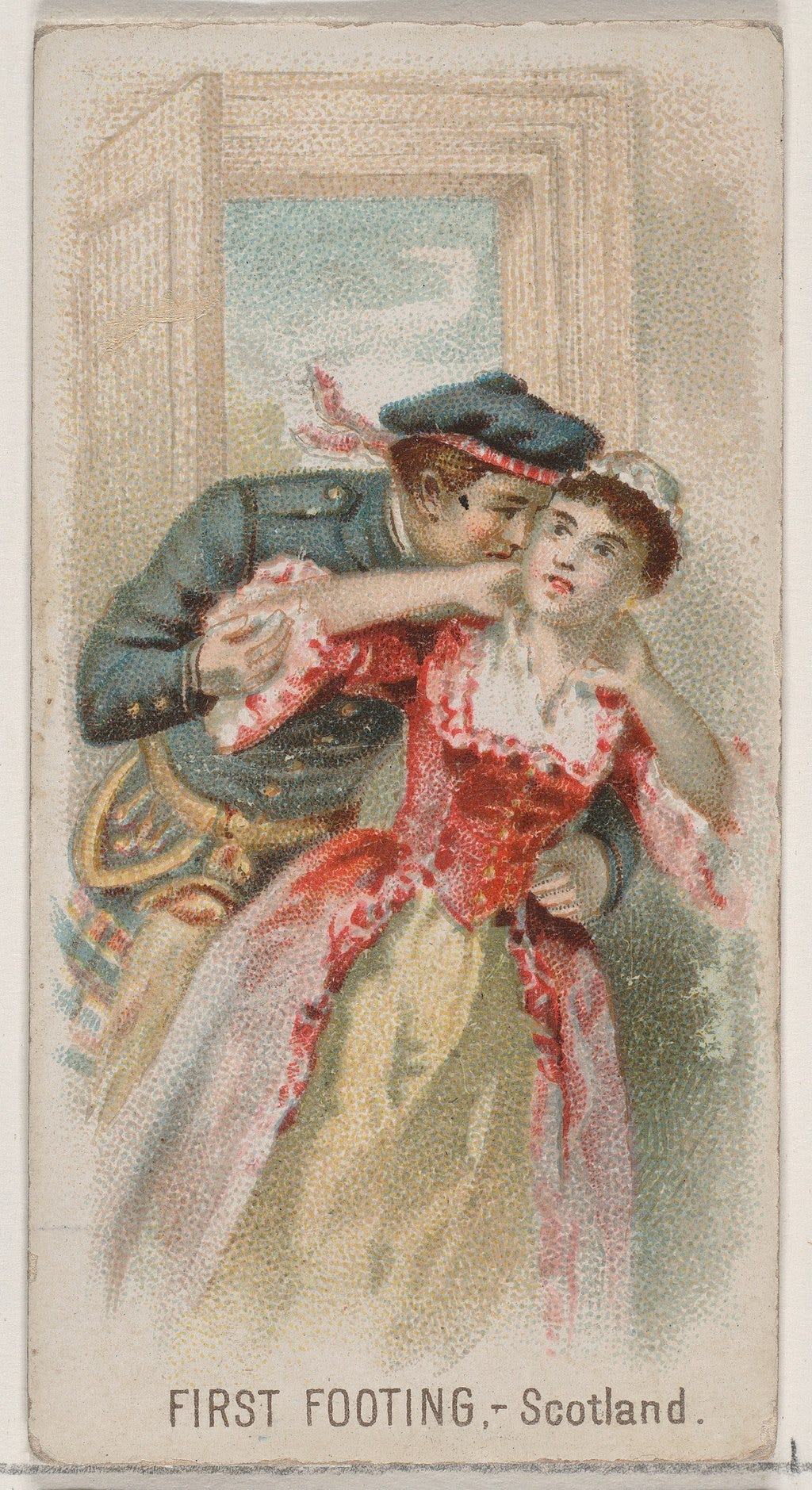
In America, Scots-Irish immigrants carried it to Appalachian communities, where the tradition still favors a male first visitor for luck, often staging it with relatives. Though less widespread today amid ball drops and resolutions, the tradition echoes in regional folklore.
The Cherryville New Year’s Shooters
In the rolling hills of rural North Carolina, Cherryville residents awaken each New Year’s Day to thunderous musket volleys and ancient chants from an annual event that preserves one of America’s oldest folk traditions.
