


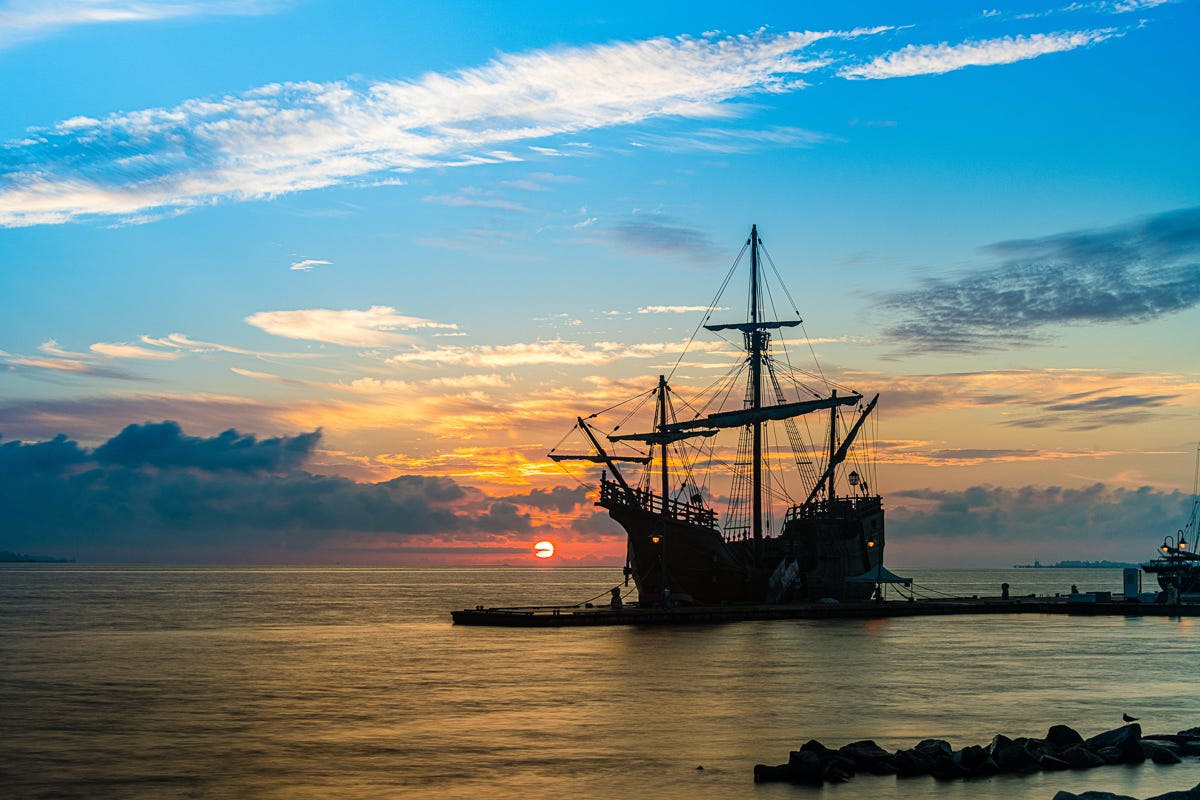
This week, we travel to the Commonwealth of Virginia, where we interview the coach of Chesapeake, Virginia Post 280—the 2025 American Legion World Series championship team— and explore Bacon’s Castle in Surry. Then, view a letter reportedly written by George Washington, whose signature has been forged at least 150 times since his death!

Winning It All—for the Right Reasons
A conversation with Chesapeake, Virginia Post 280 coach Larry Bowles
Interview by Kurt Dusterberg
By the time Larry Bowles led Chesapeake, Virginia Post 280 to the American Legion World Series in 2025, he already knew the event was something special.
As a player, he had finished as runner-up for the Virginia state championship in 1994 and 1995—for the same team he was now coaching.
Bowles’ playing days were part of a different era, before youth sports became college-focused and ultra-competitive. So bringing a team to the American Legion national championship tournament represented a chance to do two things: win something special and, at the same time, tap into a baseball niche that represented simpler times.
Despite changes in the sport, Bowles has worked hard to preserve the spirit of Legion baseball. Here’s our conversation with him about his approach to the players and love of the game.
Thanks for visiting Backroad Portfolio! We’d love to have you as a subscriber. For a limited time, subscribe for 10% off.

Bacon’s Castle
465 Bacons Castle Trail
Surry, Virginia
Bacon’s Castle is the oldest brick dwelling in North America, built in 1665 for Arthur Allen and his family. Originally called Allen’s Brick House, this rare example of High Jacobean architecture gained its famous name in 1676 during Bacon’s Rebellion, led by Nathaniel Bacon against royal governor William Berkeley. This early show of colonial resistance to British authority occurred on a property that features a reconstructed 17th-century English formal garden, along with surviving outbuildings that include an 1830 slave dwelling, 1820s smokehouse, and 1700 barn. Visitors can tour the historic grounds, and even picnic there.

Felonious Forgers
Charlottesville, Virginia
George Washington, commander-in-chief of the Continental Army during the Revolutionary War, prioritized intelligence gathering. He also personally oversaw spy networks and corresponded with agents and handlers using codes, aliases, and sometimes invisible ink. Between 150 and 200 documents attributed to Washington, however, are actually forgeries or facsimiles created long after his lifetime, according to the editors of the Papers of George Washington at the University of Virginia in Charlottesville. Some imitated his handwriting using quill pens and artificially aged paper, then sold the documents as authentic. As a result, today’s archivists and collectors must carefully authenticate materials. The letter below is believed to have been written by Washington.
