


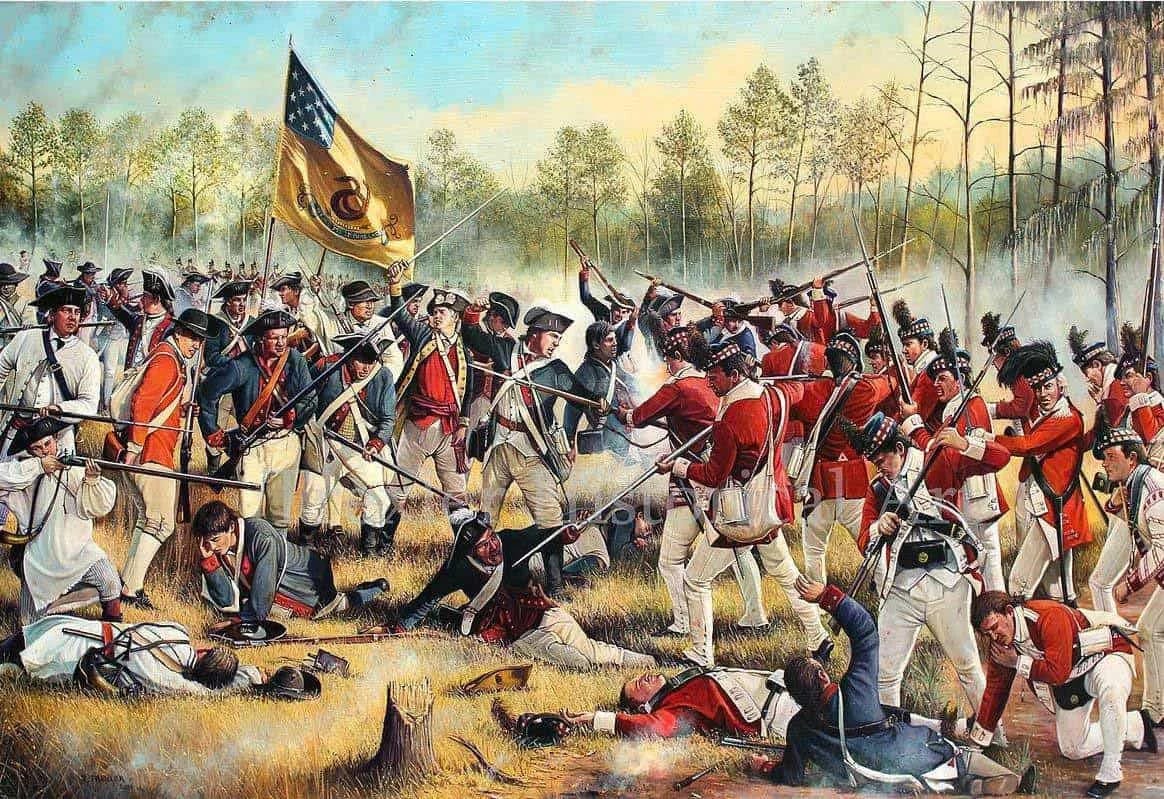
This week, we’re kicking off Part 1 of Tom Poland’s feature about Revolutionary War battles, starting with the Battle of Kettle Creek.
Kettle Creek | February 14, 1779
In Washington, Georgia, I took Route 44 toward Union Point. I crossed Kettle Creek. Then Stoney Ridge Road. Highway 68, took me to Court Ground Road, which took me to War Hill Road. When I saw the stonewall, I stood at the foot of the hill where a key battle of the Revolutionary War took place.
I walked the hill of its cemetery and monument. The air was still, humidity high, and all quiet, save birdsong. Reinforcements arrived, five ladies on a history tour. They told me Plains, Georgia, was next. Men changed history where we stood.
The British just about had Georgia under its thumb when Col. James Boyd led 600 British sympathizers across the Savannah River into present day Elbert County. Patriots Col. Andrew Pickens with 200 South Carolina militia, and Col. John Dooly and Lt. Col. Elijah Clarke with 140 Georgia Militia, overtook them at a bend in a flooded Kettle Creek. The war had not been going well for the Patriots. The British had taken Savannah as part of their southern strategy designed to separate Georgia from middle and northern rebellious colonies. But things were about to change.
Patriots surprised Loyalists twice their number, and a desperate battle raged for three hours. The turning point came when Patriot forces killed Boyd. Immediate panic and disorder set in among the Loyalist ranks. They broke and fled.
While Boyd and twenty of his men were killed and twenty-two captured, Pickens and Dooly suffered seven killed and fifteen wounded. Pickens later wrote that Kettle Creek “was the severest check and chastisement the Tories ever received in South Carolina or Georgia.”
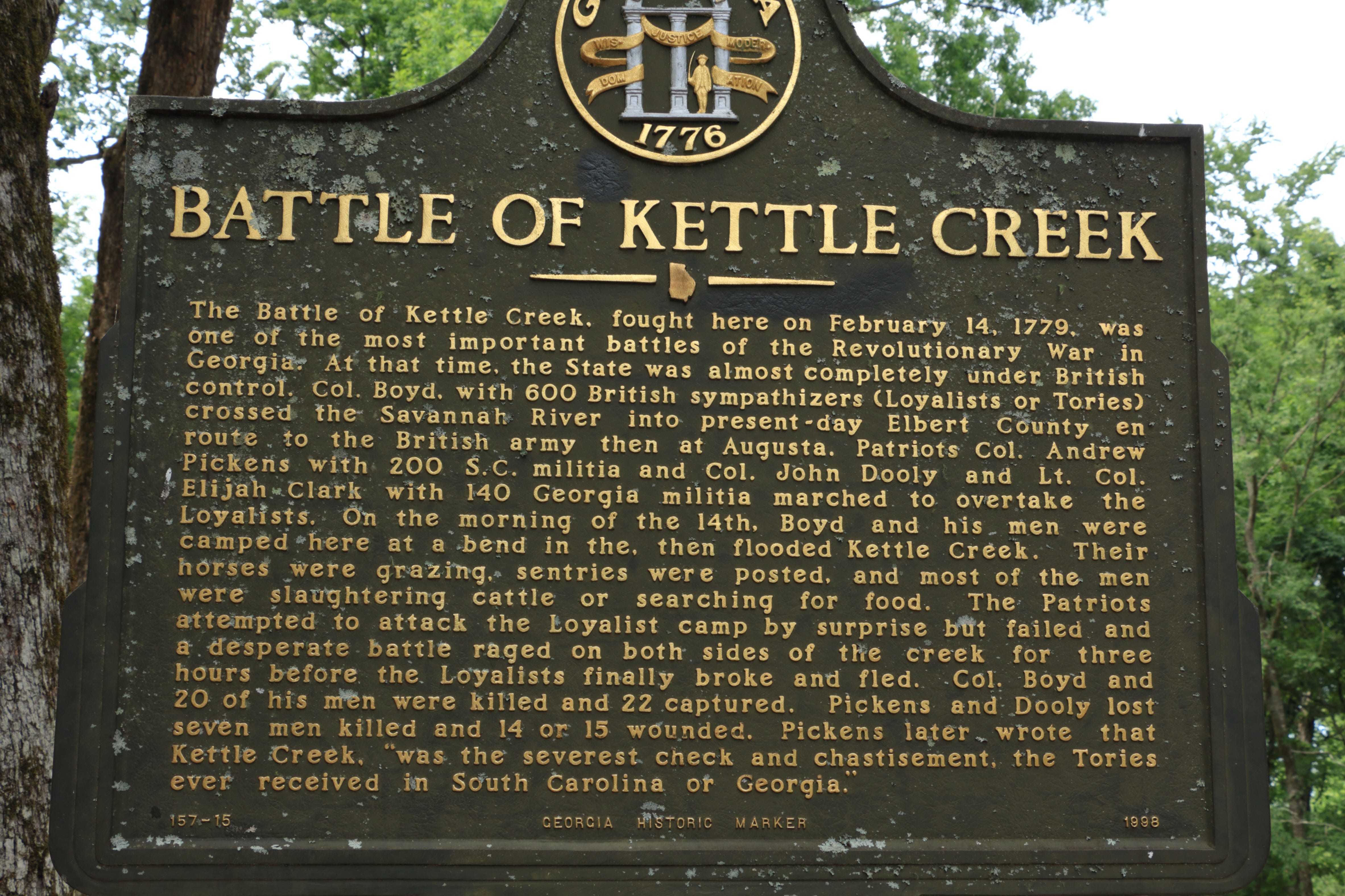
The Battle of Kettle Creek stopped a Loyalist advance and boosted morale after Savannah’s fall. It demonstrated British inability to secure the Georgia interior, halted Loyalist recruitment, and prevented the British from taking full control of upper Georgia.
Forested Kettle Creek battlefield, including “War Hill,” is a 40-acre tract encircling a 500-foot hill. Revolutionary soldiers lie reburied atop the hill.
In school all I heard about was the Boston Tea Party and the shot heard around the world, but battles like Kettle Creek did their part to stave off British control. Sometimes, like those five ladies, you have to seek history on your own. Kettle Creek is a good place to start.
Thanks for reading, and remember to always … take the long way home.
