


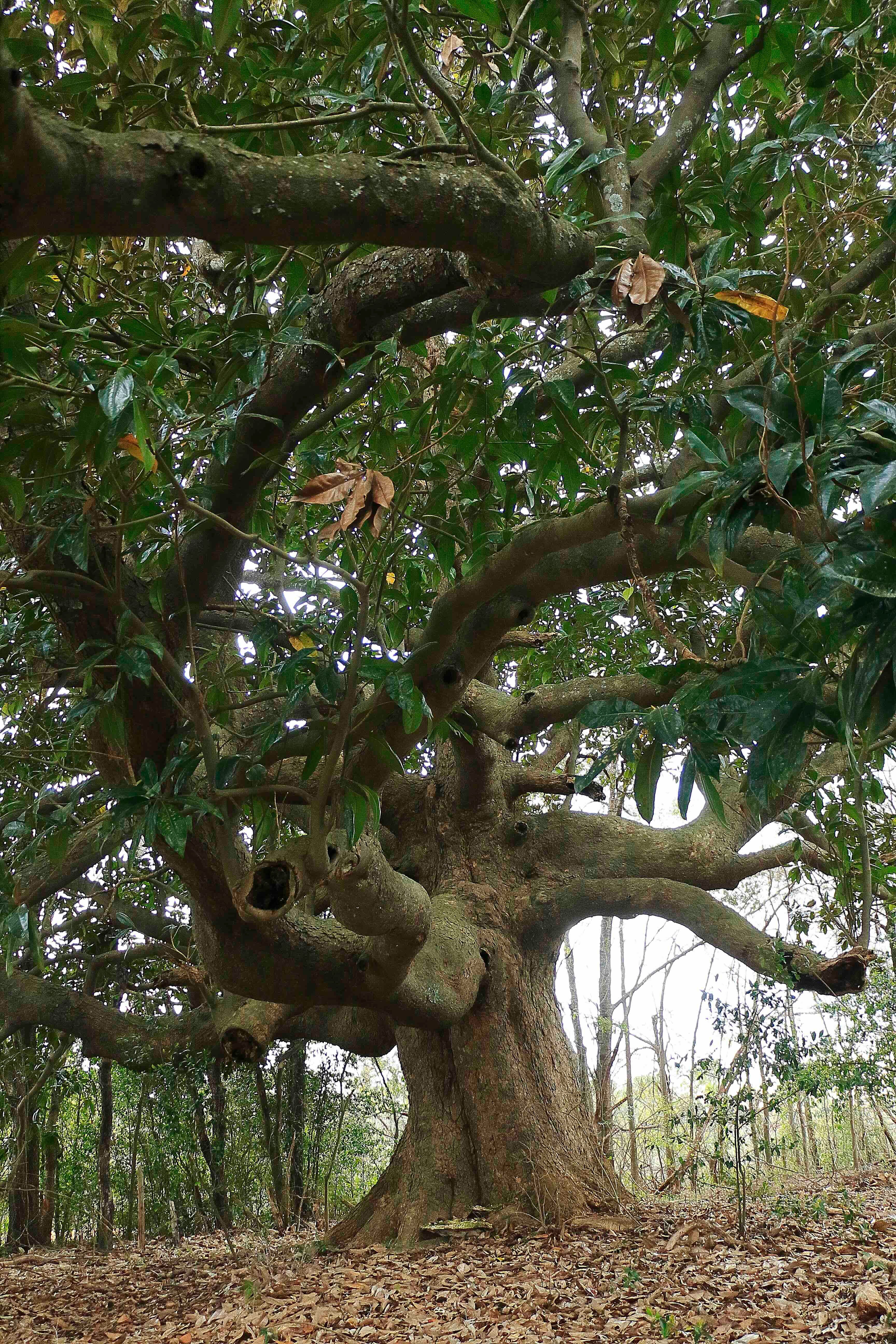
Taking the grand Curryton Magnolia down could have happened, but it didn’t.
Story and photos by Tom Poland
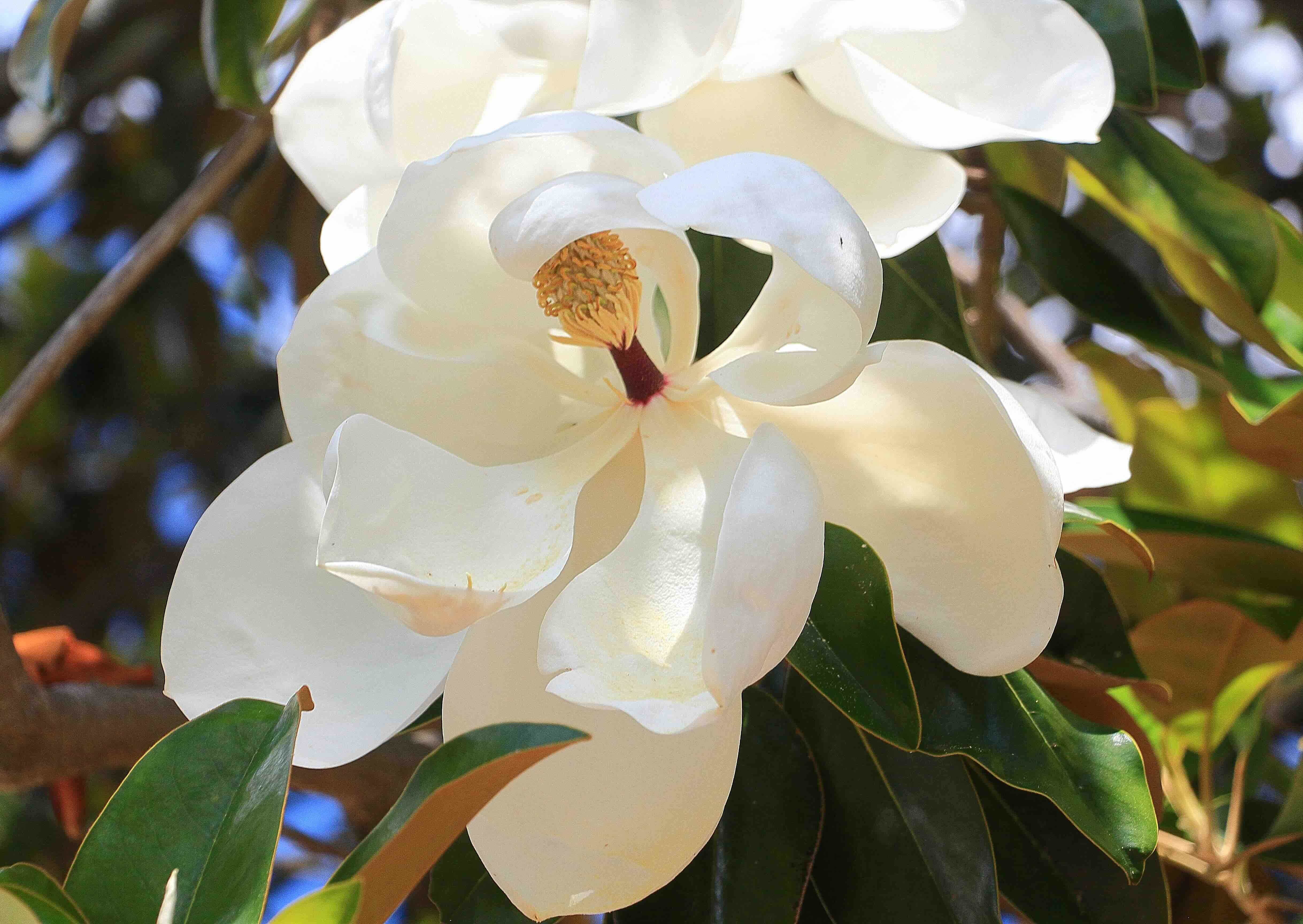
Magnolia. Three syllables conjure up snow-white blooms, antebellum homes, old churches, and home places where magnolias anchor a landscape rich with dogwoods and azaleas. And there’s that lane where 122 magnolias welcome dignitaries to the world’s grandest golf course.
To be Southern, y’all, is to walk among magnolias.
I’ll never forget the magnolia my mother and I planted at my boyhood home or the magnolia at my grandfather’s old home place. When I conjure up those magnolias in my mind’s eye, boyhood returns. Many years later, a drive to another magnolia would bring those boyhood memories back.
My journey began with a suggestion. “You need to see the magnolia down in Edgefield County. It might be a record tree.”
That was enough for me. I went.
A Drive Into History
Driving down Edgefield way, I felt a bit like William Bartram, that legendary explorer who documented a magnolia of “great perfection.” On a March afternoon, blue sky streaked white with fleecy clouds, I drove to the site of the old Curryton Academy. Topping a rise, I spied the crown of a magnolia rising from a copse. Younger trees huddled around the old tree as if seeking advice. “O great one, what’s your secret for living nigh 173 years?”
The Curryton Magnolia’s secret resides in man’s desire for knowledge and the protective acts of men 172 years later. Upon hearing the tree’s site would become a residential development, men took action to spare it. The tree merited preservation for good cause. One, it’s a magnolia that has doubled its normal lifespan. Two, it stands on a historic site, and three, it may be a state record tree.
The tree’s journey began August 10, 1853, when some 1,200 people gathered at Sweetwater Springs to choose a site for an academy. Joel Curry gifted 1,000 acres and $2,000 for an academy. Thus did “Curryton” name the magnolia and the academy.
It’s no stretch to say the old magnolia’s roots intertwine with men’s desire to educate others. Joel Curry, Robert Meriwether, George Boswell, Samuel Getzen, Dr. Hugh A. Shaw, A.P. Butler, and Andrew J. Hammond, among others, founded an academy, which consisted of two schools. One school stood where the magnolia stands. What’s unknown is whether it was the girls’ school or the boys’. The other school stood a short piece near the present-day site of Old McDonald’s Fish Camp.
My journey took me down the rise. Driving closer in didn’t help. Trees kept me from seeing a tree akin to Bartram’s “great perfection” of a magnolia. I needed a close view of the magnolia’s trunks and limbs. I parked and, camera in hand, made my way through the shrubs and trees huddled around it. Leaves crunched beneath my feet as I approached the massive trunk. I looked up. Immense limbs and the sockets of limbs long-perished fired up my imagination, evoking images of what could be an elephant and what seemed like an octopus in the grand tree’s limbs. I stood beneath the tree, grateful to know others could experience what I was feeling. I took photos, made some mental notes, and looked around.
A home stood nearby—one home, not many. For that I was grateful also. Trees like Angel Oak and Curryton Magnolia deserve their own space. It should feel sacred when you visit the site of aged trees, survivors of note.