
This week, we share our spring travel feature, which takes you to Southern tea rooms and services between Charleston and Augusta that offer refined and delicious experiences. We’ve designed this journey to span three days, but you can stretch it out to four or five if you choose.
At the end of this post, our upgraded Explorer and Voyager subscribers will find Google Maps links for all three days, plus bonus information about unique accommodations to consider.
GET THERE, Day 1
Charleston > Ridgeway, South Carolina
Backroad Route:
2 hours, 56 minutes; 136 miles
Fastest Route:
2 hours, 9 minutes; 141 miles
STARTING POINT
We recommend making Charleston’s luxurious Loutrel hotel your starting point. Arrive on day one of your journey in time to enjoy Lady Loutrel’s afternoon tea service, then book a stay at the hotel that night before heading to Ridgeway the next morning.

Lady Loutrel’s Afternoon Tea
61 State Street, Charleston, South Carolina
theloutrel.com
Enjoy afternoon tea at the Loutrel’s private, biophilic-inspired rooftop in downtown Charleston. Savor heritage botanical blends from Oliver Pluff & Co.—including Countess Grey, Masala Chai, Jasmine, and more—poured into elegant Estelle Colored Glassware. The tiered tea tower features delicate finger sandwiches such as smoked salmon, pimento cheese, chicken salad, and cucumber. Finish the experience with warm scones and an array of sweet Southern pastries and confections. This two-hour experience includes optional alcoholic sips and is available Thursday through Sunday from 11 a.m. to 5 p.m. by reservation. A minimum of four people is required and prices start at $340.
Laura’s Tea Room
105 N. Palmer Street, Ridgeway, South Carolina
laurastearoom.com
Experience a charming three-course afternoon tea in an inviting upstairs tearoom within a restored 1911 building. Begin with the iced tea of the day, then share a pot of hot tea, and select another tea from an extensive menu of black, green, white, herbal, and literary-inspired blends. Enjoy scones with Devonshire cream and fruit, a seasonal specialty such as soup or salad, and a tiered tray of sweets and savories. The service is offered Tuesday through Saturday starting at 11 a.m. with the last sitting at 1:45 p.m. Reservations are required and the service costs $37.95 per person.
KEEP GOING, Day 2
Ridgeway, South Carolina > Augusta, Georgia
Backroad Route
2 hours, 12 minutes; 104 miles
Fastest Route
1 hour, 25 minutes; 94 miles
STARTING POINT
After experiencing Laura’s Tea Room, make the scenic drive to Augusta for afternoon or evening tea at Royal Tea on Reynolds. We recommend staying in Augusta at one of the nearby hotels in the Riverwalk area, or you can make the drive to Savannah and stay overnight there before heading to your final tea experience.
Royal Tea on Reynolds
1024 Reynolds Street, Augusta, Georgia
linktr.ee/royalteaonreynolds
Experience a refined afternoon tea in this charming downtown Augusta tea house that blends traditional British style with Southern hospitality. You’ll be served finger sandwiches, scones, and an array of sweet and savory pastries on fine china. The tea house also offers take-and-bake scones so you can relive the experience at home. Tea times vary but are often available into the evening hours. Call 803.474.4435 for pricing and to make a reservation.

AND BACK, Day 3
Augusta, Georgia > Charleston, South Carolina
Backroad Route
5 hours, 1 minute; 234 miles
Fastest Route
4 hours, 28 minutes; 244 miles
STARTING POINT
We’re starting day three in Augusta, but if you opt to stay in Savannah, adjust your starting point to the address of those accommodations. You’ll end your journey back in Charleston. Feel free to stretch this experience out to four or five days to provide more time for exploring all the region has to offer.
Gryphon Tea Room
337 Bull Street, Savannah, Georgia
scadgryphon.com
This charming café near the Savannah College of Art and Design presents an elegant afternoon tea service in a historic 1926 Scottish Rite building on Madison Square. Guests enjoy a refined three-tier experience featuring a selection of delicate tea sandwiches, warm scones with Devonshire cream and jam, and an assortment of pastries and petits fours, paired with a pot of premium loose-leaf tea from varieties like Earl Grey, Darjeeling, or Hot Cinnamon Spice. The full afternoon tea is priced at $31 per person. À la carte options include a pot of tea for $9, scones for $10, tea sandwiches for $13, and tea sweets for $13. The cafe is open from 11 a.m. to 4 p.m. daily except for Sunday, when it closes at 3 p.m. No reservations are required.

Camellias Afternoon Tea
404 King Street, Charleston, South Carolina
hotelbennett.com/dining-and-lounges/camellias
End your journey with a sophisticated tea experience at Camellias in Hotel Bennett—a breathtaking, Fabergé-inspired space with pink interiors, an etched mirror ceiling, and a dazzling crystal chandelier. Savor a luxurious three-tier service featuring assorted chilled canapés, delicate tea sandwiches, warm scones with clotted cream and jam, and exquisite pastries from La Pâtisserie, paired with premium loose-leaf teas from Tealeaves. The adult tea price is $80 per person, while children ages 12 and younger cost $55 each. The Crown Tea option includes a flute of premium sparkling rosé. Tea times are 11 a.m.-1:30 p.m. and 2-4 p.m. Thursday through Sunday, with an additional 4:30-6:30 p.m. service available on Sundays. Reservations are required.
Tea Time in America
Tea first arrived in North America during the 1640s through Dutch settlers in New Amsterdam (now New York City), a bustling port settlement that served as the capital of the Dutch colony of New Netherland. The Dutch East India Company pioneered tea imports to Europe around 1610, shipping Chinese tea leaves as part of its lucrative trade network.
Dutch households in the area quickly embraced tea drinking as a social custom, displaying tea tables, teapots, sugar bowls, and silver strainers and establishing an early tea culture in the colonies before British forces captured the Dutch colony of New Amsterdam without resistance in 1664 and renamed it New York in honor of the Duke of York, the future King James II.
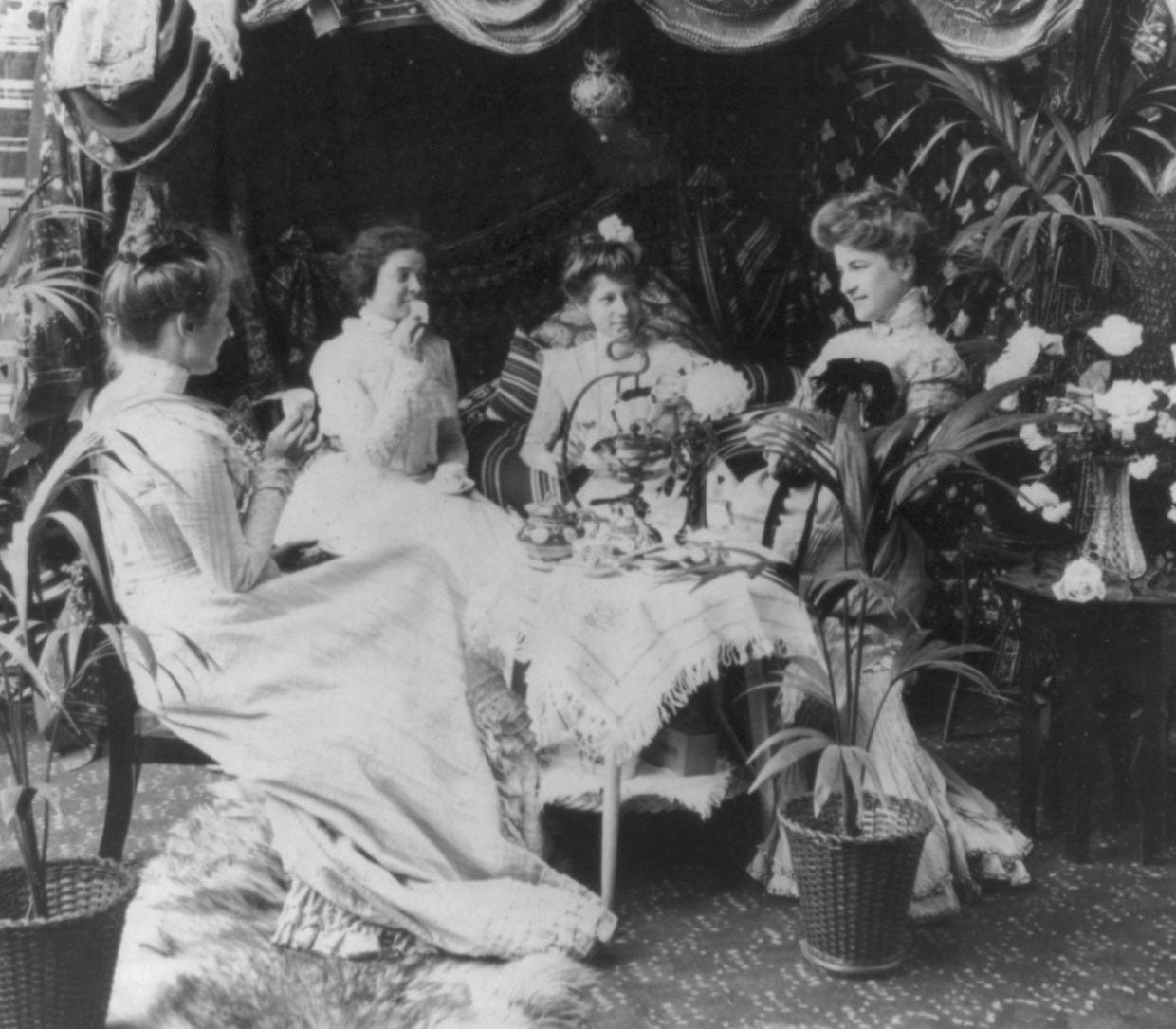
Fast-forward two hundred years. Afternoon tea originated in England around 1840 and is credited to Anna Maria Russell, the seventh Duchess of Bedford. As one of Queen Victoria’s ladies-in-waiting, she reportedly experienced a “sinking feeling” in the late afternoon due to the long gap between lunch and dinner, which was often served as late as 8 or 9 p.m. To bridge this hunger, she requested a private tray of tea, bread and butter, and cake in her rooms.
The practice proved delightful, and she began inviting friends to join her, transforming an afternoon snack into a fashionable social ritual among the aristocracy that soon spread widely. This structured Victorian-style afternoon tea spread to America in the late 19th century after the Civil War, embraced by the upper class and offered in grand hotels and tearooms.
As the practice spread among the Victorian aristocracy it evolved into a refined social occasion. Thinly sliced finger sandwiches—often crustless and dainty, featuring fillings like cucumber, egg and cress, or smoked salmon—emerged, inspired by the 1762 invention of the sandwich by John Montagu, the fourth Earl of Sandwich. (He was an avid gambler and is believed to have requested meat placed between two slices of bread so he could eat without leaving the card table.)
Scones with clotted cream and preserves later joined the tea table, particularly in the 20th century, while an array of pastries, small sponge or seed cakes, and other sweet baked goods expanded the offerings. By the late 19th century, the tiered presentation of savory sandwiches followed by scones and then elaborate sweets became the elegant standard.