

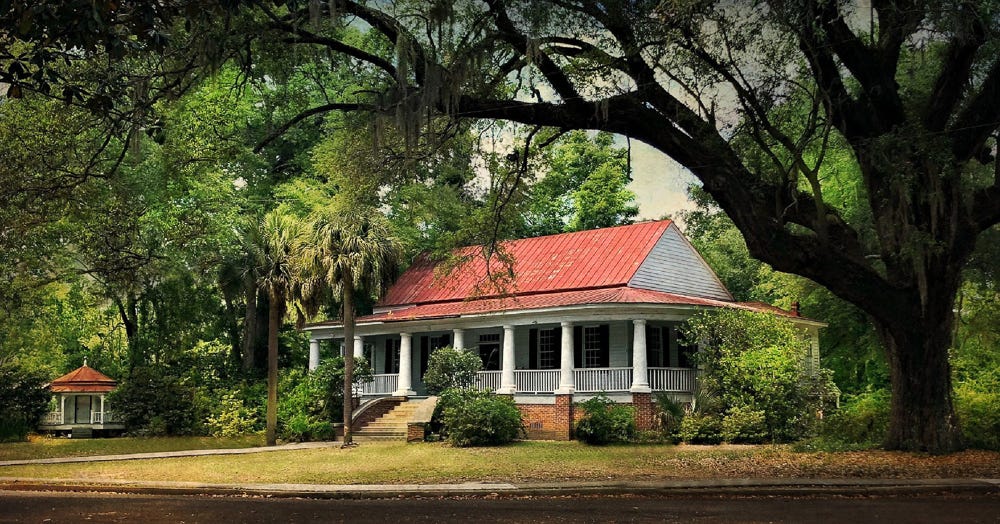
The story of a place is important, and when a structure remains, that story becomes something we can reach out and touch.
Story and photos by Beth Yarbrough, author of Southern Voice
Most anyone who cares a lick about beautiful architecture will tell you that houses can talk. They will also tell you that the old ones have the sweetest voices—deep, rich, and layered with centuries of stories that will both break your heart and make it sing. Yet all too often we hear that it makes more sense to bring in the wrecking crew, scrape the site clean, and start fresh.
“It’s just an old house. Who cares?”
We all should, and for good reason. The story of a place is important, and when a structure remains, that story becomes something we can reach out and touch. Historical markers won’t quite get you there.
Additionally, old structures are teaching tools. Studying the methods by which they were put together teaches us how to build a thing that will last. Compared with today’s new homes, many of which are put together with nail guns, pre-fabricated bones, and way too much vinyl, an old house—even in an endangered state—stands testament to the lasting power of natural materials and quality workmanship.
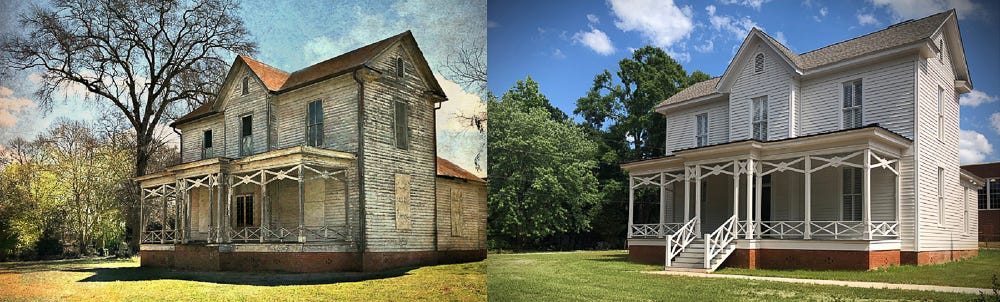
When viewed through an environmental lens, saving the old makes perfect sense. Old growth wood and bricks formed decades ago are already in place, eliminating the need for new building materials. And avoiding demolition reduces landfill waste. Estimates vary from one region to the next, but about 30% of our landfills are comprised of construction debris. In that light, it is fair to say that saving old houses is recycling at its finest.
