

As America continues celebrating 250 years of independence this month, we share the third installment of our four-part series on Revolutionary War battles fought in the Southeast. This week, read about the Battle of Eutaw Springs near Eutawville, South Carolina; our victory at Kings Mountain in Blacksburg, South Carolina; some unknown facts about Major Patrick Ferguson; and a 250-year-old Piece of Eight.

The Battle of Eutaw Springs
Part 3 of Three Battles and a Massacre
By Tom Poland
Eutaw Springs | September 8, 1781
It’s a curious battle. Britain claimed victory, yet retreated to Charleston. Their presence in the Carolina backcountry was done. Often cited for its close-quarters combat and being one of the bloodiest engagements of the war in the South, Eutaw Springs set the stage for the British surrender at Yorktown a month later.
On a cool spring morning I set out for the Eutaw Springs Battlefield, another parklike and peaceful place. It was the last major battle fought on South Carolina soil for independence, and the bloody battle raged for four hours on a blistering day.
Free subscribers can read all of Part One and preview Parts Two, Three, and Four. Upgrade your subscription for full access.

The Battle of Kings Mountain
October 7, 1780
Blacksburg, South Carolina
On a rocky, forested ridge straddling the South Carolina–North Carolina border, roughly 900 Patriot “Overmountain Men”—frontier militia from the Appalachians—surrounded and attacked a force of about 1,100 Loyalists commanded by British Major Patrick Ferguson. In a fierce, hour-long battle fought almost entirely between Americans, the Patriots charged uphill repeatedly, using cover and rifle fire to overwhelm the Loyalists. Ferguson was killed trying to rally his men. The Loyalists suffered devastating losses, with over 300 killed or mortally wounded and around 700 captured, while Patriot casualties were relatively light. The decisive victory halted British momentum after the Fall of Charleston and Camden, forced Cornwallis to retreat, and revived Patriot resistance in the South. Thomas Jefferson later called it the “turn of the tide.”
Some Facts About Major Patrick Ferguson:
No regular British troops participated in the battle besides Ferguson himself.
Ferguson was born in Scotland, not England, and lived at the Pitfour estate in Aberdeenshire. He was the second son of James Ferguson and Anne Murray and joined the British Army as a young man.
Patriots were told to look for the man with the sword in his left hand because Ferguson’s right arm was disabled from an earlier wound.
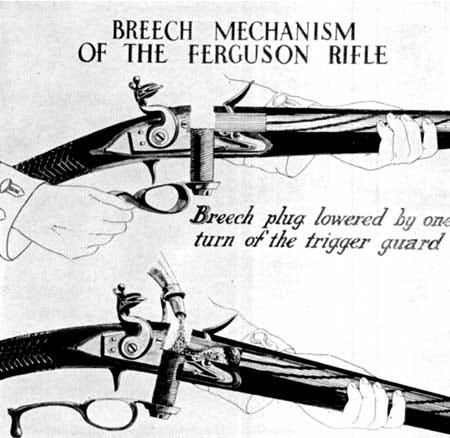
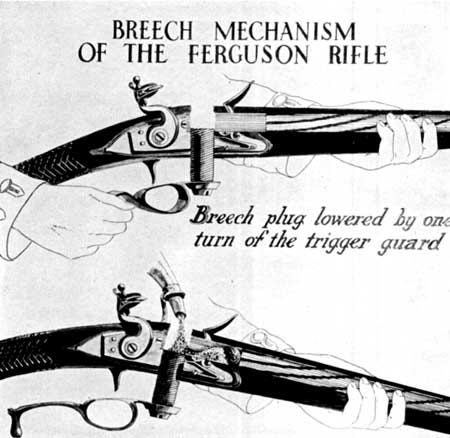
Ferguson was a noted inventor of the breech-loading Ferguson rifle (shown below), which was faster to load than standard muzzle-loaders. A few of his men had them, but most Loyalists used smoothbore muskets with bayonets.